Guides
DSCR Loans for Rental Property: What Qualifies and What Changes
Learn which rental properties qualify for DSCR loans, how HOA dues affect your ratio, and what to check before choosing a property or loan.
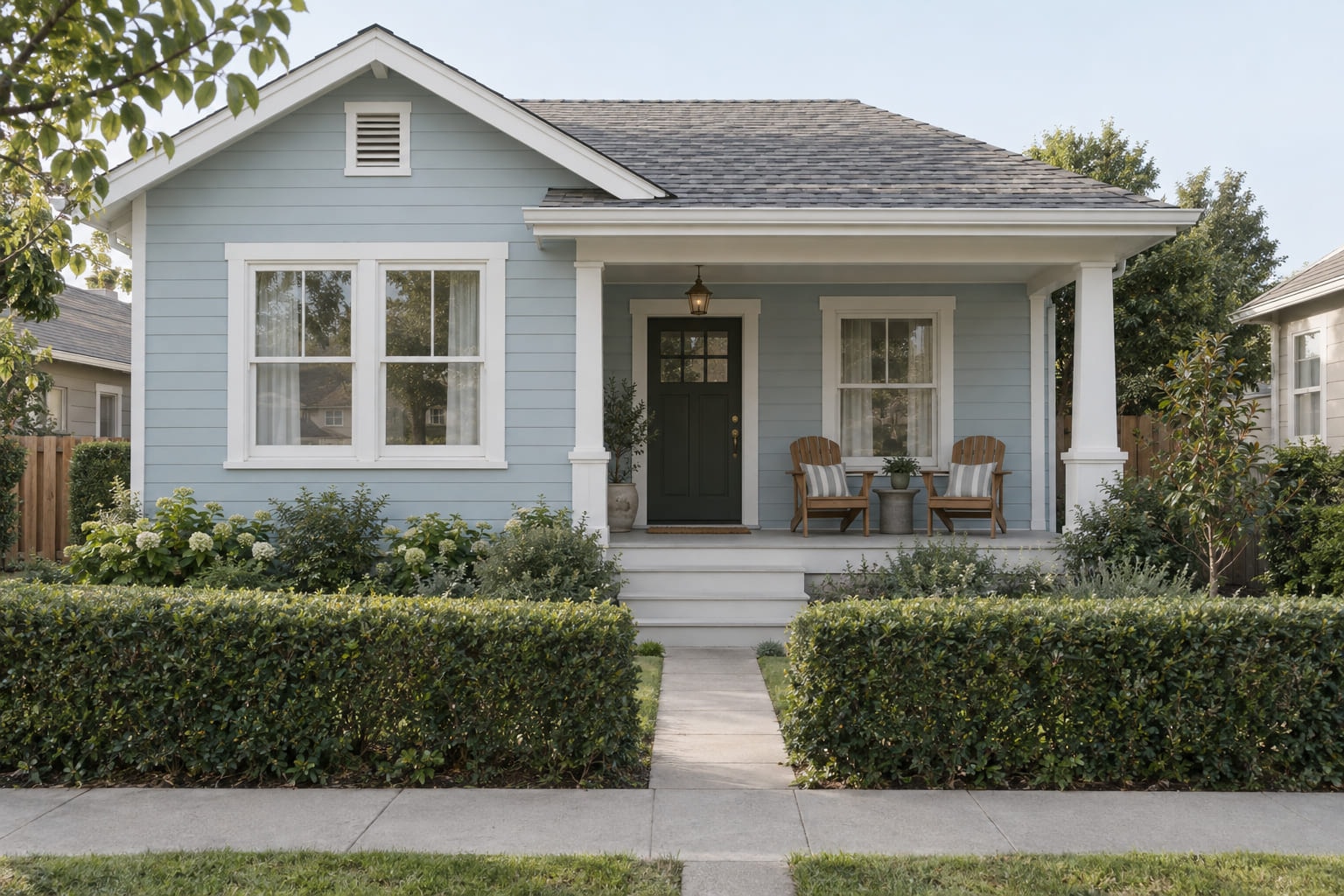
DSCR loans can finance several rental types, including houses, condos, townhomes, two- to four-unit properties, and eligible vacation rentals.
DSCR loans can finance eligible single-family rentals, condos, townhomes, duplexes, triplexes, fourplexes, and some short-term rentals. These investment-property loans use rental income to help you qualify rather than relying on your salary. The lender still reviews your credit, available cash, and the property itself.
That property review includes how much rent the lender will count and which housing costs it needs to cover. For example, a condo’s rent may cover the mortgage, taxes, and insurance but fall below the lender’s required DSCR once homeowners association dues are added. A vacation rental may require different income records and calculations than a house rented under an annual lease.
Here is how to compare rental properties, including a worked example showing exactly what HOA dues do to the ratio.
Which rental properties qualify for DSCR loans?
Many residential DSCR programs focus on non-owner-occupied properties with one to four units. Being an eligible property type is the starting point. The property's condition, rental use, location, and financial numbers must also meet the selected program's rules.
| Rental property | Potential financing fit | Main issue to check |
|---|---|---|
| Single-family home | Common residential DSCR property type | Appraisal-supported rent and the full monthly payment |
| Condo or townhome | Available through eligible programs | HOA dues, rental restrictions, and legal ownership structure |
| Duplex, triplex, or fourplex | Common residential DSCR property type | Rent for each legal unit and treatment of vacant units |
| Short-term or vacation rental | Available through programs that accept the use | Accepted income evidence and local rental rules |
| Completed new construction | May qualify for permanent rental financing | Completion, occupancy approval, and rental-income requirements |
| Property needing major rehabilitation | Usually needs renovation financing first | Condition requirements before a DSCR refinance |
| Five or more units, or mixed-use property | Often requires commercial or specialized financing | Program eligibility and a different income calculation |
A property you intend to live in generally needs an owner-occupied loan. That includes a duplex where you occupy one unit and rent the other.
For the basic qualification approach and how it differs from a personal-income mortgage, see what a DSCR loan is.
How is DSCR calculated for a rental property?
DSCR, or debt service coverage ratio, shows how much rental income is available for each dollar of the property’s qualifying monthly housing payment.
Suppose a lender accepts $2,500 in monthly rent and calculates a $2,000 monthly housing payment. Dividing the rent by the payment gives:
$2,500 ÷ $2,000 = 1.25 DSCR
That means the lender counts $1.25 in rent for every $1 of housing costs. A ratio of 1.00 means the two amounts are equal. Below 1.00, the accepted rent is less than the payment.
For many one-to-four-unit rental programs, that housing payment is called PITIA. It includes mortgage principal and interest, property taxes, insurance, and any homeowners association or condo dues. Dues still count even when you pay them separately from your mortgage.
The rent figure matters, too. Use the income your lender accepts, which may differ from what you collect or expect to charge. Confirm the lender’s calculation method, since some programs use a different formula, such as one based on income remaining after operating expenses.
A rent-to-PITIA calculation helps you understand mortgage qualification. To estimate what you could keep each month, you also need to account for vacancies, repairs, management, and other rental expenses.
What changes with each rental property type?
Single-family rentals: confirm the rent the lender will accept
A house with one rental unit has a straightforward starting point: one property's rent divided by its qualifying payment. The uncertainty is often the rent estimate.
A seller's advertised rent is not necessarily the amount the lender will use. The program may consider an existing lease, the appraiser's market-rent opinion, or both. A vacant house may be eligible under additional conditions, but projected rent needs acceptable support.
For example, reducing accepted rent from $2,400 to $2,200 on a $2,000 payment lowers DSCR from 1.20 to 1.10. The purchase price and loan amount have not changed.
If your estimate depends on a higher rent than the current lease, see our DSCR loan appraisal guide, which explains how the property's value and rental-income analysis affect underwriting.
Condos and townhomes: check the association and ownership structure
A condo has two potential obstacles: its monthly association costs and the lender's review of the project. A strong DSCR ratio does not resolve a building's insurance, financial, or condition problems.
Ask for current dues, rental restrictions, assessment information, and relevant association financial and insurance documents. Confirm that your intended rental use is allowed.
A non-warrantable condo does not meet applicable Fannie Mae or Freddie Mac project guidelines. Some DSCR programs accept these properties. Angel Oak's property guide, for example, lists non-warrantable condos and condotels for its Investor Cash Flow program, with additional review and restrictions. That does not mean every project qualifies.
A townhome describes a building style, not necessarily its legal ownership. It may have condominium ownership or fee-simple ownership, where you own the home and land. Have the lender confirm the classification and resulting review requirements.
Two- to four-unit rentals: evaluate every unit's income
For a duplex, triplex, or fourplex, the lender evaluates the qualifying rent for the units against the property's payment. Document the leases and identify any vacancies or units whose legal status needs confirmation.
Do not assume an empty unit will count at your target rent. The program determines whether and how market rent can be used. An unpermitted extra apartment also should not be treated as qualifying income without confirmation.
Your investment budget should test vacancy separately. A duplex renting for $1,400 per unit produces $2,800 when both units pay, but only $1,400 if one is empty.
For the unit-by-unit documentation and financing differences, see DSCR loans for multifamily properties.
Short-term rentals: establish the accepted income method first
A vacation rental's best booking month is a weak basis for a year-round financing decision. The lender may require historical revenue, approved market projections, an appraisal-supported long-term rent estimate, or another program-specific method.
Confirm the documents required for a purchase versus a refinance, the period being measured, and any adjustments to projected revenue. Also confirm that local rules and association restrictions permit the rental use.
Your own budget needs seasonal vacancies, cleaning, utilities, furnishings, platform fees, and management costs, even when those expenses are not all deducted in the lender's residential ratio.
Our DSCR loans for Airbnb guide covers the income documentation and rental-use questions to resolve before relying on vacation-rental revenue.
New construction and fixer-uppers: plan the transition to rental financing
A standard permanent DSCR loan generally is not the funding source for unfinished construction or substantial rehabilitation. The property must meet the program's completion, condition, and rental requirements.
If you are building a rental, evaluate the expected permanent loan before committing to the construction debt. Completion alone does not guarantee that the finished property's value and accepted rent will support the refinance amount. Our DSCR construction loans guide explains the construction-to-rental financing sequence.
For an existing property needing major repairs, compare the renovation loan's payoff with a conservative estimate of the later DSCR loan. The DSCR versus hard money comparison explains where short-term renovation financing fits and what must work before refinancing.
Five or more units and mixed-use properties: confirm the program and formula
A five-unit apartment building or a property combining apartments and commercial space may require a different financing program from a residential DSCR loan.
Commercial lenders commonly calculate DSCR as net operating income divided by debt service. Net operating income is property income after operating expenses, before financing costs. Use matching periods, such as annual net operating income and annual debt service.
If your property falls into this category, see our commercial DSCR loans guide, which explains why the operating-expense review and loan structure differ.
How much can HOA dues change a rental property's DSCR?
HOA dues can lower your DSCR enough to affect whether the property qualifies for a loan. The lender includes those dues in the monthly housing costs that rent must cover, even if you pay them separately from the mortgage. If rent stays the same while dues increase, your DSCR falls.
That means two rentals with the same rent and mortgage payment can have different DSCRs because of their association fees. A property with higher dues may need more qualifying rent or a smaller loan to meet the lender’s required ratio. Include the actual dues when comparing properties.
Consider a rental with these illustrative numbers:
- Monthly qualifying rent: $2,300
- Loan amount: $225,000
- Interest rate and term: 7.25%, fully amortizing over 30 years
- Monthly principal and interest: $1,534.90
- Monthly taxes and insurance: $450
The rate is purely illustrative, not a reflection of current rates or a verified loan quote. Holding all other inputs constant shows the effect of association dues:
| Monthly HOA dues | Monthly PITIA | DSCR |
|---|---|---|
| $0 | $1,984.90 | 1.16 |
| $150 | $2,134.90 | 1.08 |
| $250 | $2,234.90 | 1.03 |
| $350 | $2,334.90 | 0.99 |
| $500 | $2,484.90 | 0.93 |
At $350 in dues, accepted rent falls about $35 short of the qualifying payment each month, before other operating costs. The unrounded ratio is about 0.985, below 1.00.
Whether that ratio is eligible depends on the loan program. It does not automatically mean every lender will decline the property.
Can a larger down payment improve the ratio?
Yes. A larger down payment means you borrow less, which lowers your monthly principal-and-interest payment if the rate and loan term stay the same. With the same qualifying rent and lower housing costs, your DSCR improves. Property taxes, insurance, and HOA dues still need to be included, so a larger down payment may help you qualify without necessarily making the rental profitable.
Using the same example with $350 in monthly dues:
| Target ratio | Approximate maximum loan amount | Reduction from the original $225,000 loan |
|---|---|---|
| 1.00 | $219,885 | $5,115 |
| 1.25 | $152,453 | $72,547 |
For a purchase at the same price, those loan reductions would require approximately that much additional down payment, before changes to fees or other costs.
Alternatively, keeping the original payment would require about $2,919 in accepted monthly rent to reach 1.25. You cannot substitute an unsupported rent increase for the lender's approved income figure.
These estimates assume the interest rate, loan term, rent, and other housing costs stay the same. Reaching a 1.00 DSCR does not automatically qualify you for the loan, and reaching 1.25 does not guarantee a lower rate. The lender still reviews your credit, cash reserves, and property, and may offer different terms if you change the loan amount.
How should you handle special assessments?
A special assessment is an extra charge from the association, often to pay for major repairs or a shared project. Give your lender the amount, payment schedule, reason for the charge, and any unpaid balance. Confirm whether it changes the monthly costs used to calculate your DSCR, affects the property’s eligibility, or increases the cash you need at closing.
Include it in your own budget regardless of the lender's calculation. A $10,000 assessment payable over 12 equal monthly installments adds $833.33 a month during that year. A lump-sum bill creates a different cash requirement.
Review the association's reserves and planned work as well as current dues. If an assessment payment is already included in the quoted monthly association charge, avoid counting it twice.
Taxes, insurance, and interest rates can change the result too
HOA dues are only one part of the property’s monthly housing costs. Higher property taxes, insurance premiums, or mortgage rates can also increase the payment used to calculate your DSCR. If qualifying rent stays the same, those higher costs lower the ratio and may affect how much you can borrow.
Using the same $2,300 rent and the no-HOA payment example above:
| Change to the assumptions | New monthly payment | New DSCR |
|---|---|---|
| No change | $1,984.90 | 1.16 |
| Taxes increase by $100 a month | $2,084.90 | 1.10 |
| Insurance increases by $150 a month | $2,134.90 | 1.08 |
| Interest rate increases to 8.25%, with the same loan and term | $2,140.35 | 1.07 |
Each row changes one assumption independently. With $250 in HOA dues added to the 8.25% scenario, the payment becomes $2,390.35 and the ratio falls to 0.96.
Use a property-specific insurance quote and a tax estimate that considers any applicable reassessment after purchase. The seller's existing bill may not represent your future expense.
For a condo, review the association's master insurance coverage and the coverage you must buy for your unit. Association dues may help pay for the master policy, but that does not establish what your individual policy must cover or cost.
What DSCR does a rental property need?
The required DSCR depends on the lender and loan program. Some programs require enough qualifying rent to cover the full monthly mortgage payment, while others allow the rent to fall short. When DSCR is calculated by dividing rent by PITIA, a ratio of 1.00 means the qualifying rent equals the monthly mortgage payment, including principal, interest, property taxes, insurance, and any association dues.
Published lender requirements show how your options differ. Ridge Street Capital lists a minimum DSCR of 1.00, while LendingOne advertises ratios as low as 0.75. A 0.75 ratio means qualifying rent covers only 75% of the payment, leaving you to cover the remaining 25% before other rental expenses.
Griffin Funding states that it has no minimum DSCR requirement and may approve ratios below 1.00 when cash reserves and the down payment support the loan. It also offers a separate no-ratio program, which does not use the property’s rental cash flow to qualify. Both options still have credit, down payment, and cash reserve requirements, so a lower ratio or no-ratio program does not guarantee approval.
Use our DSCR lender comparison to shop competitive lenders offering DSCR loans, and confirm the requirements for your rental property.
Does qualifying for a DSCR loan mean the rental will make money?
Qualifying for a DSCR loan is only part of evaluating a rental investment. Vacancy, maintenance, management, owner-paid utilities, and major repairs all reduce the money you keep. Once you account for those expenses, a property that qualifies for financing may still leave you covering a monthly shortfall.
Build a cash-flow budget using the property’s expected income and actual expenses, including any assessment payments not already counted in PITIA. Then review the down payment, closing costs, required cash reserves, and any prepayment penalty to decide whether the loan fits your budget and how long you plan to own the property.
Frequently Asked Questions
No. Many programs accept eligible one- to four-unit residential rentals, but the property must also satisfy condition, rental-use, location, and underwriting requirements. Larger apartment buildings, mixed-use properties, and unusual property types may need specialized financing.
Residential DSCR rental loans generally require non-owner-occupied investment use. If you intend to live in the house or in one unit of a small multifamily property, disclose that plan and use financing that permits it.
Some programs allow vacant properties using acceptable market-rent evidence and additional underwriting conditions. A vacant, completed house and an unfinished or uninhabitable property present different eligibility issues. Confirm the program before assuming projected rent will qualify.
Yes. In residential programs that use PITIA, applicable HOA dues are included in the qualifying monthly payment. Higher dues lower the DSCR when rent and the other payment costs stay the same.
Minimum loan amounts vary by lender and program. Check the minimum early if you are buying a lower-priced rental or making a large down payment, since either could reduce the loan amount below the lender’s limit. Our best DSCR lenders guide compares published loan ranges to help you find lenders that fit your financing needs.
Yes, subject to the lender's rules. Individual-property loans typically require each property to meet the applicable program conditions. Lenders may also limit total exposure or review your other financed properties and reserves. A strong ratio on one rental does not automatically qualify the next.
DSCRLoans101 is an independent editorial site. We do not originate loans and we are not affiliated with any lender. Every figure on this page comes from published lender materials or primary sources, and we publish the date we verified it.
More in Property Types See every guide in this section